Of note, Ali Larijani, Secretary of the Supreme National Security Council of Iran, received his PhD on the subject of Immanuel Kant, and authored several essays on Kant now taught and studied in Western universities:
Kant's Philosophy of Mathematics
Kant's Metaphysics
Kant's Synthetic A Priori Judgements
Al Jazeera's report referred to his family as 'the Kennedy's of Iran' (https://www.aljazeera.com/features/2026/3/3/who-is-ali-larijani-the-iranian-official-promising-a-lesson-to-the-us), his daughter working at Emory University in Atlanta, GA until she was deported in January.
https://www.telegraph.co.uk/world-news/2026/03/17/i-met-irans-shadowy-security-chief-ali-larijani/
I met Ali Larijani. He would have made a deal to survive
Security chief is latest senior figure in Iranian regime killed by US-Israeli air strikes
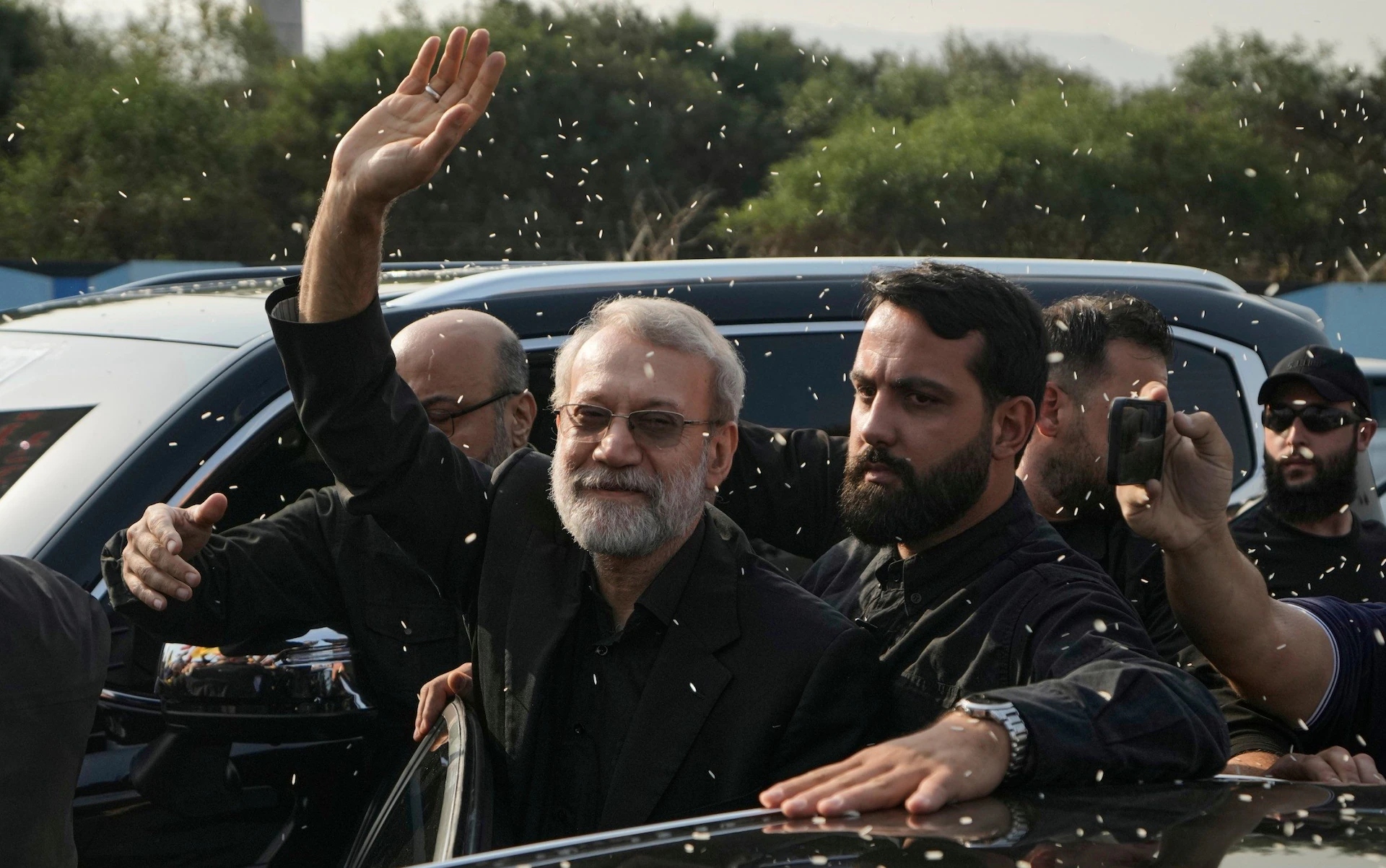
In a country ruled by clerics in dark robes, Ali Larijani was a suit-wearing technocrat, capable of turning his hand to any crisis.
At one moment, he’d happily spout a hard line against America, but he was equally adept at telling conservatives to stop bickering and accept a compromise. Such chameleonic qualities are rare, but useful, in the power centres that run the Islamic Republic.
The day I met him in Iran’s parliament in 2015, he was tackling the nuclear agreement Barack Obama would eventually conclude with Iran the following year.
Hassan Rouhani, Iran’s president at the time, was under pressure day in and day out from hardliners, and he needed someone to support the government.
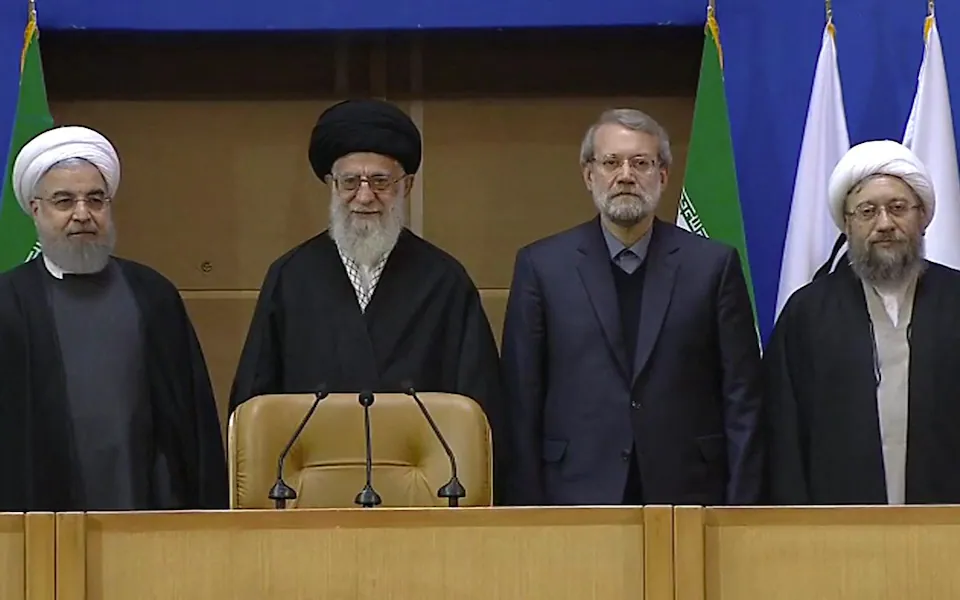
Larijani, as the speaker of parliament, was the man who would quell dissent and eventually secure the necessary backing.
His death at 67 on Monday in an Israeli air strike comes when talk of “off-ramps” and negotiation between Iran and the US seems increasingly naive. It has removed one potential interlocutor capable of leading efforts to end the war.
Larijani thrived on the realpolitik of making a deal, and had plenty of experience.
It is extremely rare for foreign reporters to meet top officials in Iran, but for about 20 minutes in 2015 Larijani answered questions, mine among them, after a rancorous session where some Iranian MPs said any deal with America would be treacherous – and that they would stop it.
Larijani did not agree with them and he was happy to tell us so. This is how it goes in Tehran: there are many who speak, but few are given the power to decide.
Larijani told us a deal would happen if Ayatollah Ali Khamenei, supreme leader at the time, wanted it to – and angry MPs would have to live with it.
Months later, he was proven right. Legislation designed to tear up the deal in parliament was amended.
“We want to help the country and not create new problems,” Larijani said after MPs fell into line on the agreement, which Israel – Benjamin Netanyahu in particular – hated and lobbied, unsuccessfully, to stop.
The thought of revenge, in the bloodiest of ways, will not have escaped Israel’s prime minister.
In Washington, however, Iran’s hardening rhetoric spells problems for Donald Trump, the US president. Even if American and Israeli bombing stops, Iran’s quest for vengeance is unlikely to abate.
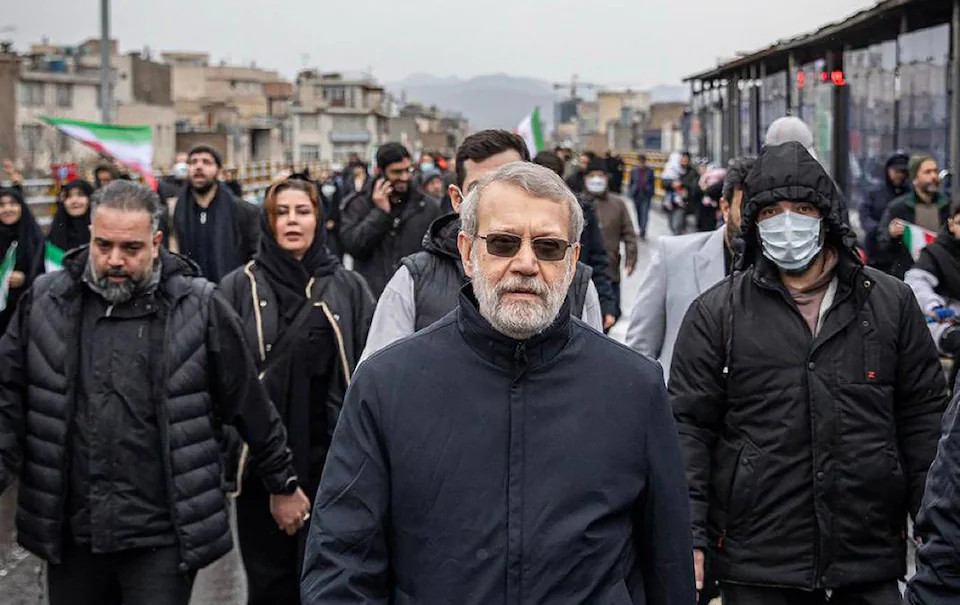
In appearance, Larijani was more bank manager than radical.
Softly spoken, in short, crisp sentences that made necessary points, he was a listener, not a loudmouth. To Israel, however, he was the kind of pragmatist it deems a wolf in sheep’s clothing.
That is what Iran has lost: someone capable of doing whatever it takes to maintain his place in a hierarchical system where survival – he was parliament speaker for 12 years until 2020 – is the highest skill in politics.
Lately, that survival instinct has seen him become a public face of the regime’s brutal suppression of protests that killed thousands. One day a negotiator, another a hitman.
But he was also middle management, and his death leaves a void in the class that operates one level below Iran’s theocratic leadership.
Mr Rouhani, the former president, is nowhere to be seen. Nor is Javad Zarif, the foreign minister who negotiated the nuclear deal with the US, Britain and European countries a decade ago.
Someone will come forward to replace Larijani, but unless an established and credible figure is willing to step out of the shadows – and into the threat of assassination – then talk of an endgame is just that, talk.
Larijani’s killing indicates the war will end only when Israel decides, not Mr Trump.